
Last updated August 25, 2026
Free in-home measure and quote - PGT, CGI and CWS impact lines compared on your actual openings, style by style
Sliding glass doors
Impact garage doorsPGTCGI
 Before
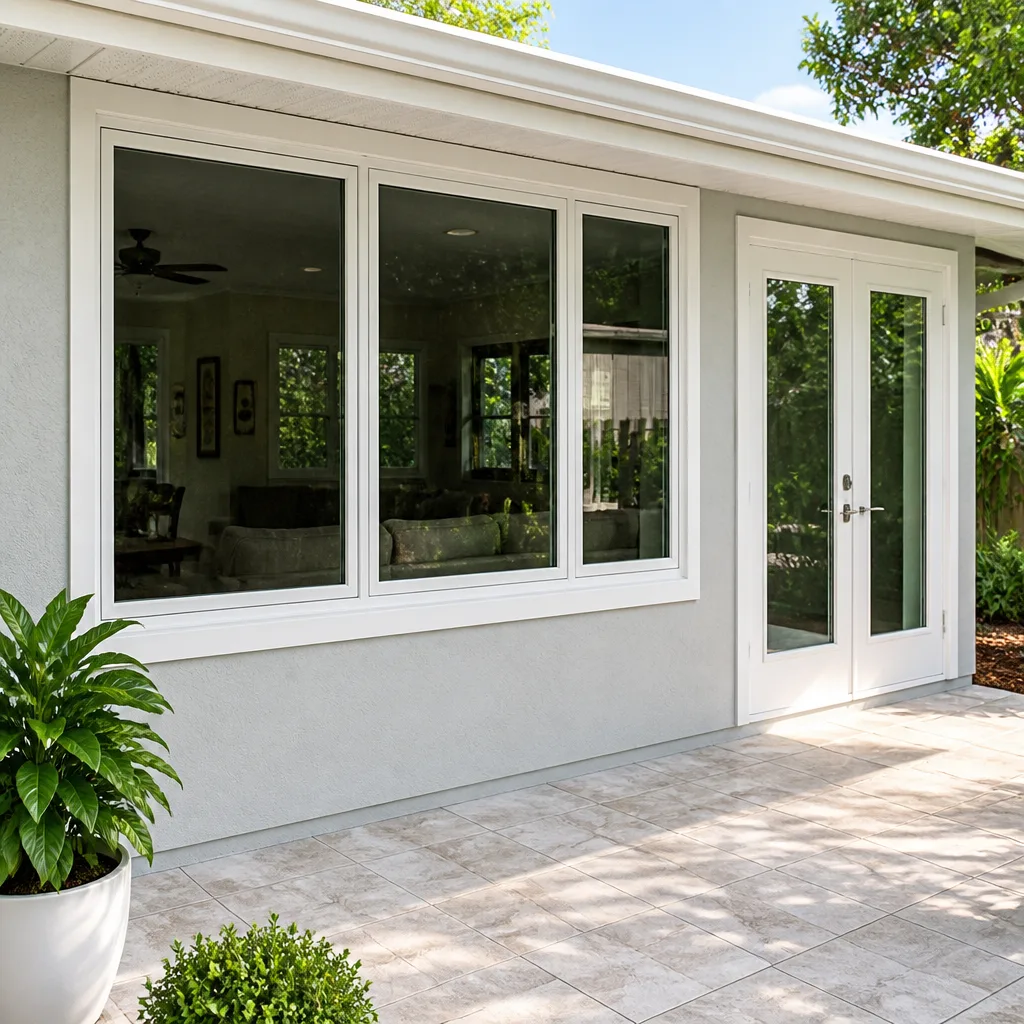 After
After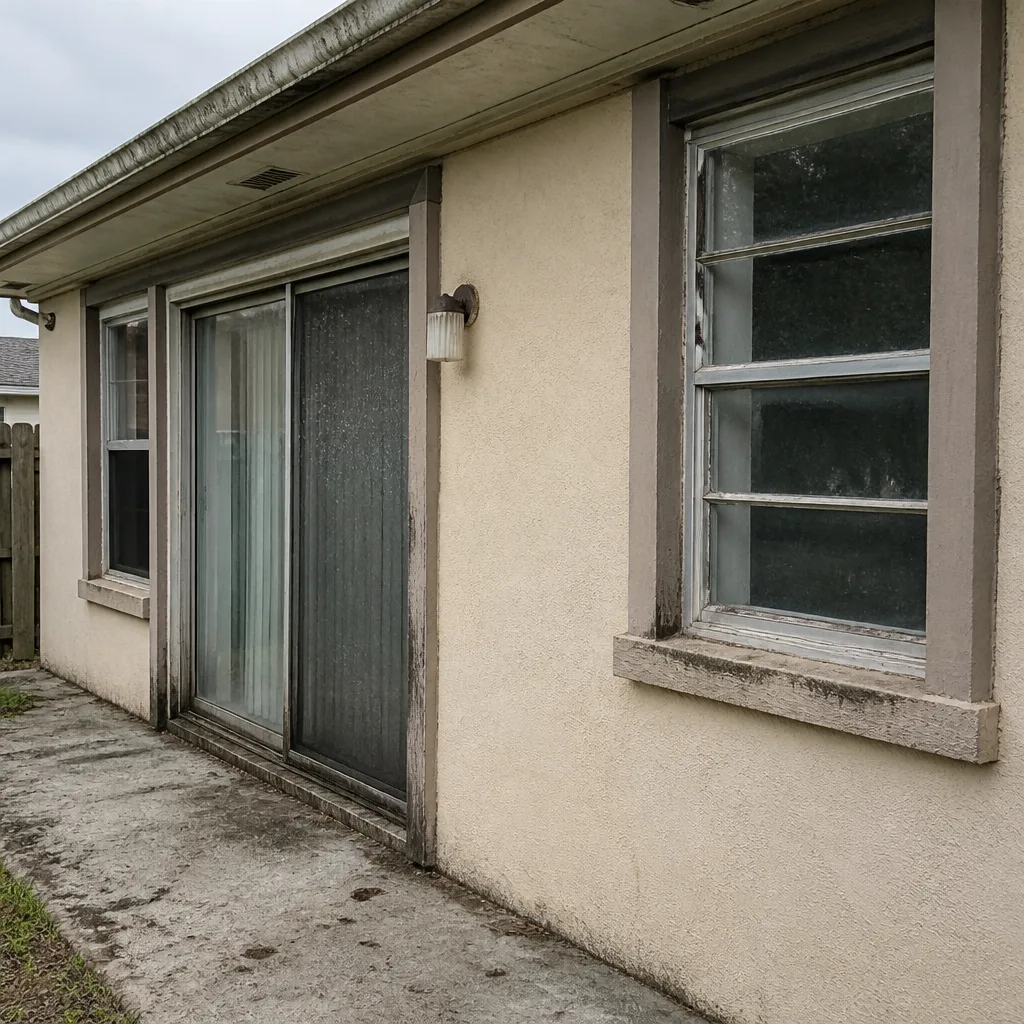 Before
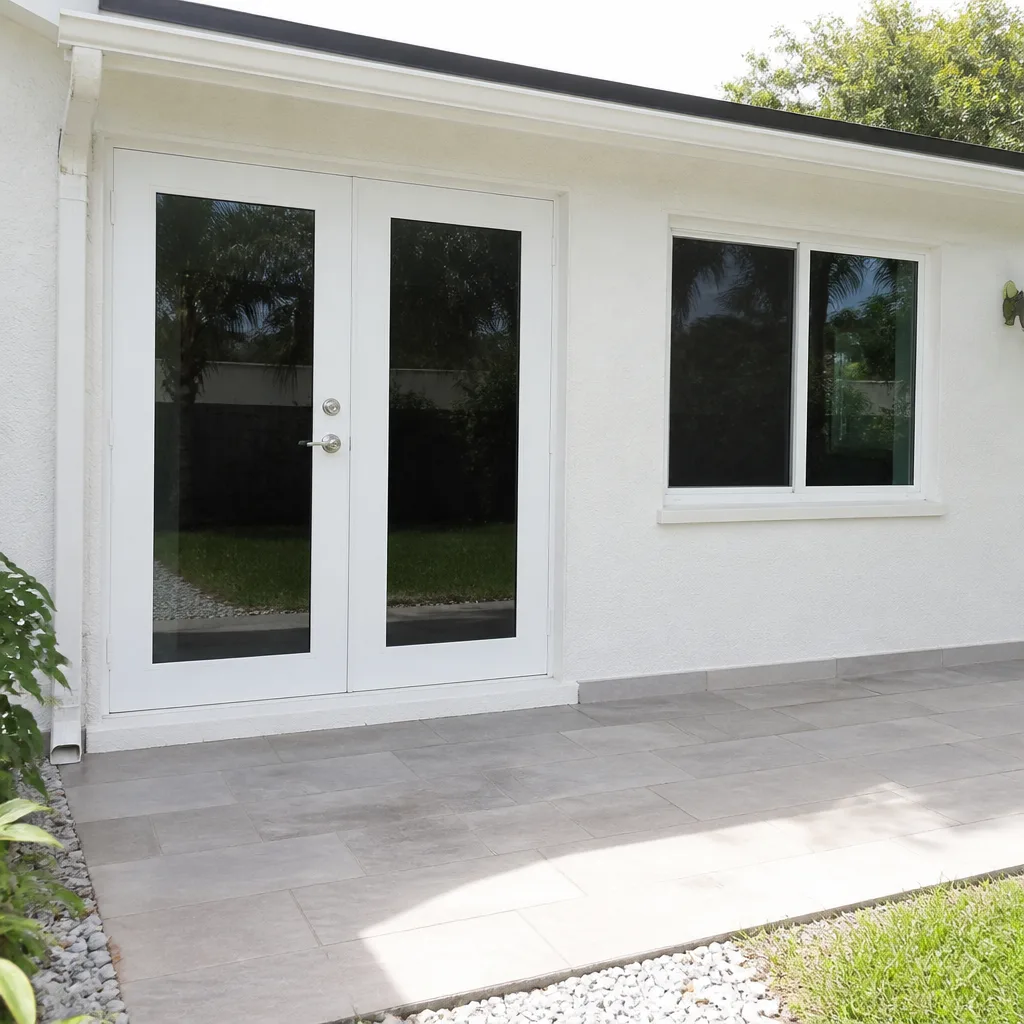 After
After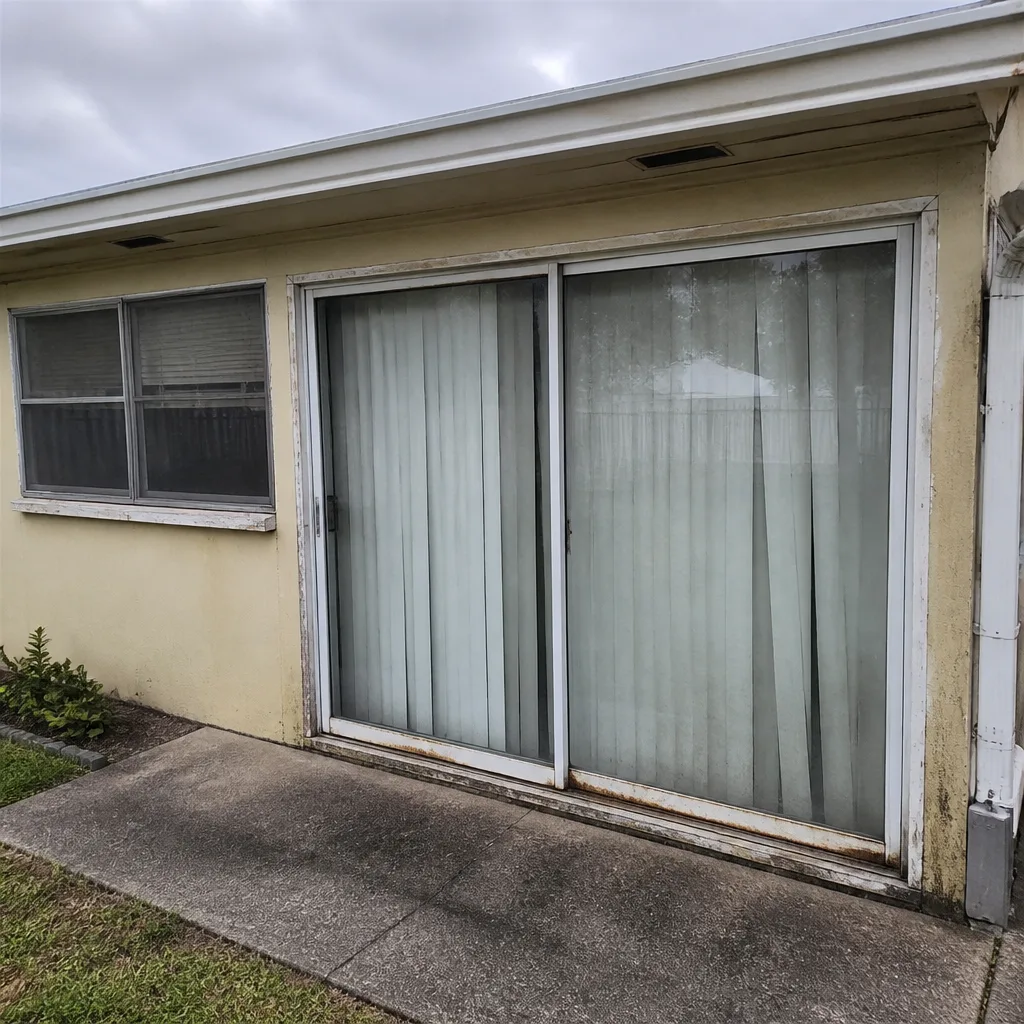 Before
 After
AfterDIY vs Professional Windows & Doors: The Greenacres Homeowner’s Decision Guide
Most homeowners don’t discover their window has failed until the power bill arrives or the afternoon sun turns the living room into a kiln. By then, the damage is rarely just the glass. It’s the frame, the flashing, the seal, and sometimes the wall cavity behind it. This guide walks you through what a window or door job actually involves, where DIY money gets wasted, and when a licensed crew in Greenacres is the cheaper decision even when the upfront number looks higher. We’ll give you the real costs, the hidden failure points, and the questions to ask before anyone touches your home.
Quick Answer
For most Greenacres homeowners, professional window and door replacement is the safer and ultimately less expensive choice. DIY makes sense only for narrow cosmetic fixes like re-caulking, tightening hardware, or replacing a screen. Anything involving glass, flashing, structural framing, or impact-rated openings should be handled by a licensed installer who carries both the manufacturer warranty and liability for the work.
Table of Contents
- The True Cost of Doing It Yourself
- What DIY Gets Right (and Where It Works)
- Where DIY Goes Wrong in Greenacres
- Florida Code, Wind Load, and Why It Changes Everything
- The Warranty Reality: What Gets Voided and Who Pays
- What a Professional Installation Actually Includes
- Measuring, Ordering, and the Mistakes That Cost Twice
- Energy Efficiency and the Greenacres Heat Load
The True Cost of Doing It Yourself
The Home Depot price tag on a mid-grade vinyl window says $250 to $450. The install bill says $150 to $350 per opening. The homeowner math looks obvious: buy it myself, watch a YouTube video, save the labor. But the true cost of a DIY window in Greenacres stops being about the window about halfway through the job, when the old frame comes out and the rot shows up, or the rough opening isn’t square, or the new flashing doesn’t match the old stucco line. That’s the moment the job stops being a Saturday project and starts being a repair.
Real numbers from jobs we’ve walked behind in Palm Beach County:
- A homeowner-installed single window with a bad flashing detail: $800 in materials, $2,300 to fix the water damage a year later.
- A mis-measured sliding glass door: $1,400 for the door, restocking fee on a non-returnable custom size, and a second order at $1,800.
- A DIY window that fogged in eleven months because the desiccant seal was nicked during handling: no warranty, full replacement cost.
DIY isn’t free labor. It’s unpaid labor that carries the full financial risk of the outcome. You’re betting your own time and your own walls. The question isn’t whether you can learn to hang a window. The question is whether you want to learn on the window that’s already in your house.
What DIY Gets Right (and Where It Works)
We’re not going to tell you every tool belongs in a technician’s hands. Some jobs are genuinely reasonable for a careful homeowner, and doing them yourself is fine. It keeps the house maintained and gives you a feel for when something’s actually failing versus just squeaking. Around Greenacres, where homes run from 1980s concrete block to newer stucco-on-frame builds, the safe DIY list looks like this:
- Re-caulking exterior trim and interior seams. A tube of quality exterior-grade sealant costs $8 to $14. Clean the old bead, apply a new one, and you’ve sealed air gaps for a year or two.
- Tightening or replacing visible hardware. Hinges, handles, locksets, roller assemblies on older sliding doors. If the fastener is exposed and the part is standard, buy the replacement and swap it.
- Replacing window screens and weatherstripping. Spline, screen mesh, and replacement felt or rubber seals are $15 to $60 in materials and require no structural work.
- Cleaning tracks and lubricating moving parts. Dirt in the track wears rollers and makes doors drag. Vacuum the track, wipe with a dry cloth, apply a silicone-based lubricant sparingly.
- Painting or staining interior wood frames. Cosmetic work with no effect on the window’s structural or thermal performance.
What all of these have in common: they don’t break the building envelope. The window stays in its opening, the flashing stays sealed, the glass stays under pressure. Once a DIY project requires pulling the glass, cutting out the frame, disturbing the exterior finish, or penetrating the weather barrier, you’ve crossed from maintenance into installation, and the rules change.
Where DIY Goes Wrong in Greenacres
Greenacres sits in a humid subtropical zone with an average annual rainfall above 60 inches and a hurricane exposure that puts every window and door opening under structural scrutiny. The failures we see on homeowner installations follow predictable patterns:
Flashing and Water Intrusion
The single most common DIY failure isn’t the window itself. It’s the flashing. In a professional job, the installer layers the sill pan, jamb flashing, and head flashing so water that gets past the outer seal drains down and out, not into the wall. Most homeowner installs use peel-and-stick flashing incorrectly or skip the sill pan entirely. The result is water wicking into drywall, studs, and flooring. By the time a homeowner sees the water stain, the repair costs five to ten times what the flashing would have cost to do right.
Structural Compromise on Load-Bearing Walls
Some window openings in Florida homes carry roof load. Enlarging an opening, removing a mullion, or cutting a header without an engineer’s sign-off weakens the structure. Greenacres sits under High-Velocity Hurricane Zone requirements adopted from Miami-Dade and Broward standards for large portions of Palm Beach County. A window opening that wasn’t properly framed and tied to the existing structure fails inspection, and worse, fails under wind load when it matters.
Improper Sealing and Fogged Glass Early
Insulated glass units fail when moisture penetrates the seal between panes. Handling a unit by the edges, letting the desiccant get dirty, or setting it in a racked frame stresses the seal. A DIY unit that fogs in 18 months has no manufacturer coverage, because the warranty excludes damage caused by improper installation. We’ve replaced units in Greenacres homes that homeowners hung themselves and watched fog before the second summer.
Florida Code, Wind Load, and Why It Changes Everything
If you hang a window in Ohio, the inspector cares whether it fits. If you hang a window in Greenacres, the inspector cares whether it can take a missile hit, stay in the opening during 140 mph gusts, and still meet the energy code. Florida Building Code chapter 16 sets wind-load requirements based on exposure category and Risk Category, and Palm Beach County enforces product approval requirements that mean not every window sold in the store is legal to install in every opening.
Here’s what that means in practice:
- Impact-rated windows and doors in openings within the wind-borne debris region must carry Florida Product Approval numbers, not just a manufacturer’s logo. Homeowners who buy a cheap non-impact unit and install it themselves often find the permit gets denied because the product isn’t approved for the specific application.
- Not everywhere in Greenacres requires impact glass. Some openings can use a non-impact window plus an approved shutter system. The determination depends on the home’s location, the opening’s size, and the product’s design pressure rating. Getting it right requires checking the product approval against the permit application before ordering anything.
- Permit and inspection are mandatory. Window and door replacement is structural work. Palm Beach County and the City of Greenacres require permits for replacement. A licensed contractor pulls the permit, schedules the inspection, and carries liability if the work fails. A homeowner who skips the permit owns that liability forever and will face it at resale.
Code inspection isn’t a formality in this county. It’s the line between “home improvement” and “unpermitted structural modification.” We’ve seen insurance claims denied because a homeowner-installed window lacked a permit record. That’s a five-figure lesson in why the pros don’t skip the paperwork.
The Warranty Reality: What Gets Voided and Who Pays
Here’s a fact most homeowners find out the hard way: every major window and door manufacturer excludes DIY installation from the warranty. Andersen states its warranty covers defects in manufacturing and materials when the product is installed in accordance with its installation guide. Pella, Marvin, Milgard, and Jeld-Wen all have similar language that ties warranty coverage to proper installation. The manufacturer can’t verify the cause of failure if the installation wasn’t performed by a licensed professional, and they’re not obligated to cover it.
The window you save $200 on by installing yourself is a window with no warranty. The glass, the frame, the hardware, the seal: all uncovered if something fails. A professional installation, by contrast, includes manufacturer warranty registration at the time of install. At TruePane Windows & Doors, we register both warranty layers in writing before the truck leaves the driveway, so the homeowner knows the duration and coverage are on file. We call it The Keystone Standard, and it’s the reason a $300-per-opening install fee isn’t labor cost. It’s the price of a warranty that actually gets honored.
Beyond the manufacturer, a licensed installer stands behind the work itself. DIY leaves you standing behind yourself. If the window fogs, who pays? You do. If the flashing leaks, who pays? You do. If the frame sags, who pays? You do. That’s not a frugal trade. That’s transferring the contractor’s risk onto your own mortgage.
What a Professional Installation Actually Includes
If you’ve never watched a proper window install, the word “installation” undersells the job. A licensed crew doesn’t just swap glass. The process runs like this:
- Site inspection and measurement. A technician measures each opening twice, checks for square, notes the rough opening dimensions, verifies the wall construction, and identifies any rot, termite damage, or structural issue before ordering the unit.
- Product selection and quoting. The homeowner sees side-by-side quotes on paper for different manufacturer lines. A TruePane tech will lay out Andersen next to Pella next to Marvin so there’s a direct comparison of what the money buys, not a salesperson’s preference.
- Permit pull and scheduling. The contractor files the permit with the City of Greenacres, ensuring the product approval and wind-load documentation are in order before installation starts.
- Removal and prep. The old window comes out without damaging the surrounding stucco, drywall, or interior trim. Any rotted framing gets cut out and replaced. The rough opening is cleaned, squared, and prepped for flashing.
- Flashing and setting. The sill pan goes in first, then the window, then the jamb and head flashing, all layered so water drains outward. This is the step DIY skips or bungles, and it’s the step that determines whether the window lasts five years or thirty.
- Sealing and insulation. Gaps around the frame get low-expansion foam, not spray foam from a hardware can that over-expands and bows the jambs. Interior and exterior trim go back on, and the exterior finish gets matched.
- Cleanup and warranty registration. The work area is broom-cleaned, the homeowner gets a walkthrough of the installation, and the manufacturer warranties are registered in writing before the crew leaves.
Measuring, Ordering, and the Mistakes That Cost Twice
We’ve lost count of the Greenacres homeowners who called after ordering a window that didn’t fit. The tape measure said one thing. The rough opening said another. The replacement window arrived, and the installation turned into a construction project. Here’s why measuring for replacement windows is the most dangerous DIY step of all:
- A window is not the size of the hole. Replacement windows are sized smaller than the rough opening to leave room for shimming, squaring, and insulation. Getting that clearance wrong means the unit won’t seat or won’t seal.
- Square is rare. The jamb on one side may be 1/4 inch off from the jamb on the other. A good tech measures width at top, middle, and bottom, and height at left, center, and right, then works from the smallest dimension. Miss one measurement, and the window is scrap.
- Custom sizes are final sale. Once you order a custom-size window from Andersen or Marvin, that’s your window. If the measurement was wrong, you own a very expensive and detailed picture frame. No refund, no return.
- Ordering the wrong product line costs more than restocking. A homeowner who orders a window rated for a low wind zone instead of a High-Velocity Hurricane Zone rated unit has to buy it twice. The first one isn’t legal, the second one is full price.
At the risk of sounding like we’re protecting our trade: measurement is not a favor we throw in. It’s a critical step that determines whether the rest of the job succeeds. We measure every opening twice, and we order from the actual manufacturer’s sizing chart, not a generic size assumption. That practice has kept more Greenacres homeowners out of the “I ordered the wrong window” trap than any installation technique.
Energy Efficiency and the Greenacres Heat Load
Greenacres gets more than 230 days of measurable sunshine most years, and summer heat indexes hit triple digits routinely from May through September. The air conditioning runs the electric bill, and the windows are the weak point where that cold air escapes. The Department of Energy estimates up to 30% of a home’s heating and cooling energy is lost through inefficient windows. In South Florida, the number skews harder toward cooling loss.
The performance difference between a cheap DIY window and a professionally installed Energy Star rated unit is significant:
- Solar Heat Gain Coefficient (SHGC). Lower is better in Florida. A window with an SHGC of 0.25 blocks 75% of the sun’s heat before it enters the house. A standard clear-glass window lets most of that heat in and your AC fights it all day.
- U-Factor. Measures how well the window resists heat transfer. In a cooling climate, a U-factor of 0.30 or lower is the target. Cheap units often run 0.50 or worse.
- Low-E coatings. A professionally selected window carries the right Low-E coating for the climate. Applying a film from a hardware store after the fact is a Band-Aid on a bad window.
- Air leakage rate. A well-installed window has almost no air infiltration. Gaps from sloppy flashing or a poor seal leak cold air all summer, and the leak compounds as the frame shifts.
A homeowner who spends $400 per window replacing 10 windows with low-efficiency units saves upfront and pays it back in higher AC bills for 20 years. A homeowner who spends $700 per window on the right units with professional installation sees the energy savings within a decade and never thinks about the windows again. In Greenacres, the sun is the biggest contractor working against your house. Hire a professional to deal with it.
Common Mistakes to Avoid
- Skipping the permit. Unpermitted window replacement in Greenacres is a title defect. When you sell, the buyer’s lender may refuse, and the repair to bring it to code costs more than the original job. Get the permit.
- Buying the window before the measurement. Sounds obvious, but the number of homeowners who order based on a guess and then call us to fix the result is steady. The measurement happens first, always.
- Assuming all windows are legal in all openings. Not every unit sold at the big box store meets Florida product approval for a given wind zone. Verify the product approval number against the permit before you buy.
- Reusing old flashing. Flashing is not reusable. It tears, it degrades, it loses its seal. Every window replacement in Greenacres must include new flashing, and a homeowner reusing old flashing is building in a leak.
- Caulking as waterproofing. Caulk is an air seal and a last line of defense. It is not the waterproofing layer. The flashing is the waterproofing leaf. Caulk alone will leak.
- Ignoring the condition of the frame. If the wood under the window is soft, the window can’t be installed properly. Replacing glass over rot just hides the problem and gives the rot a year to spread.
When to Call a Professional
Any job that touches the building envelope, the glass, the flashing, or the structure of the opening belongs with a licensed crew. If you see water stains below a window, caulk pulling away from the frame, glass fogging between panes, or a door that binds in the summer, don’t keep tightening the same screw. Get an inspection. TruePane Windows & Doors offers free estimates in Greenacres. Call (754) 339-0784 and we’ll send a background-checked, uniformed technician who will measure, explain what’s actually wrong, and quote you on paper. No pressure, no surprise line items, no second appointment left hanging. If it’s a repair we can save you money on, we’ll tell you that too. If the pane isn’t true, the job isn’t done. That’s been the rule since Dale Kessler started the company in 2008, and it’s the standard on every job we do in Greenacres.
Frequently Asked Questions
Yes, as a homeowner you can pull an owner-builder permit and perform your own window replacement in Greenacres, provided you comply with all Florida Building Code requirements and pass inspection. Be aware that owner-builder work carries the same legal obligation for code compliance as a contractor’s work, and that if you sell the home within a year, Florida law restricts unpermitted or owner-builder work in some cases. Most homeowners who choose this path discover that the time, material risk, and lack of warranty make it a poor trade. If you’d rather have the job done, inspected, and warrantied, call (754) 339-0784 for a free estimate.
A standard vinyl replacement window in Greenacres typically runs $700 to $1,500 installed, depending on size, frame material, glass package, and wind-load rating. Impact-rated windows start around $1,200 and can run $3,000 or more for large openings or high-end lines like Marvin or Pella. Sliding glass doors run $2,500 to $6,500 installed. These are full-installation numbers including permit, flashing, insulation, and warranty. For an exact quote on your openings, call (754) 339-0784. Estimates are free and in writing.
Yes, in almost every case. Andersen, Pella, Marvin, Milgard, and Jeld-Wen all write their warranties to require installation in accordance with their published installation guidelines, and none of them extend coverage to defects caused by improper installation. If you install it yourself and it fails, the manufacturer will deny the claim. A professional install with both warranty layers registered in writing, which is what TruePane does on every job, is the only reliable way to keep the coverage intact.
Greenacres homes are generally required to have either impact-rated windows and doors or an approved alternative like hurricane shutters or panels, depending on the home’s location and the specific opening’s design pressure rating. The Florida Building Code’s wind-borne debris region covers most of Palm Beach County, and the product approval number must match the specific application. A licensed installer checks the approval before ordering. A homeowner guessing at the requirement often buys the wrong unit and can’t use it. Call (754) 339-0784 for a no-cost assessment of what your home actually needs.
Glass package, frame construction, wind-load rating, and warranty. The $300 window typically uses a lighter frame, a standard glass package with higher SHGC, and is not impact rated. The $1,000 window carries a low-E glass package tuned for South Florida, a reinforced frame, a High-Velocity Hurricane Zone rating where required, and a manufacturer warranty that actually covers full replacement. In Greenacres, where the sun and wind both work against the envelope, the cheaper window often becomes the more expensive window within five years.
Most standard single-family window replacements in Greenacres take one to two days for the full job, not per window. A typical 10-window project is a one-day installation with a two-person crew, assuming the openings are in normal condition and no unexpected structural repair is needed. Custom orders take four to eight weeks to manufacture after the permit is approved. The old windows stay in place until the new units arrive, so the home is never unsecured. We’ll give you a written timeline at the estimate.
The Bottom Line
DIY window and door work is a reasonable choice when it’s maintenance: caulk, screens, weatherstripping, hardware. It becomes an expensive gamble the moment the glass comes out of the opening. Greenacres code enforcement, the Florida Building Code, and the reality of warranty language all point the same direction. A window is only as good as its flashing, its measurement, and its product approval. Hire a licensed installer, register the warranties, and keep an eye on the work through the free estimate in writing. Dale Kessler and the team at TruePane Windows & Doors serve Greenacres with the same standard on the hundredth job as on the first. Call (754) 339-0784 to schedule your free estimate. The worst way to save money on a window is to pay for it twice.
Explore more at the TruePane Windows & Doors home page for services, service areas, and the Keystone Standard.
Written by Dale Kessler, Owner at TruePane Windows & Doors, serving Greenacres since 2008.
Six Reasons Homeowners Choose TruePane Windows & Doors
Impact systems engineered to design pressures up to +/-100, matched to your wind zone - your openings hold when the storm arrives.
Low-E insulated impact glass from our manufacturer lines commonly cuts monthly cooling bills 20-30%.
Laminated impact glass shuts out up to 40% of outside noise - traffic, neighbors, weather.
Monitoring services run $30-90 a month. Laminated impact glass resists forced entry around the clock, with no subscription.
Florida homeowners average around 25% savings on the windstorm portion of their policy after protecting every opening - some homes qualify for more.
A full impact package upgrades curb appeal, buyer confidence and appraised value in one project.