
Last updated August 27, 2026
Free in-home measure and quote - PGT, CGI and CWS impact lines compared on your actual openings, style by style
Sliding glass doors
Impact garage doorsPGTCGI
 Before
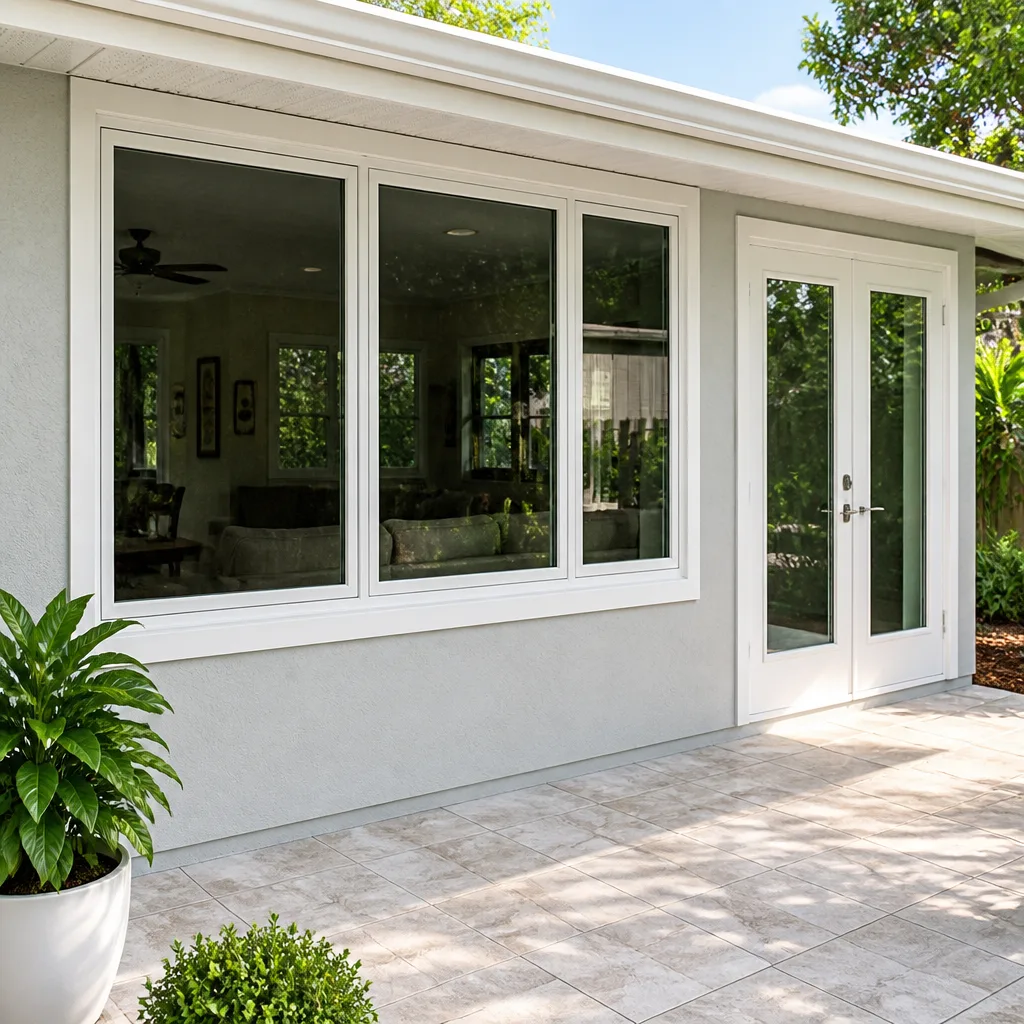 After
After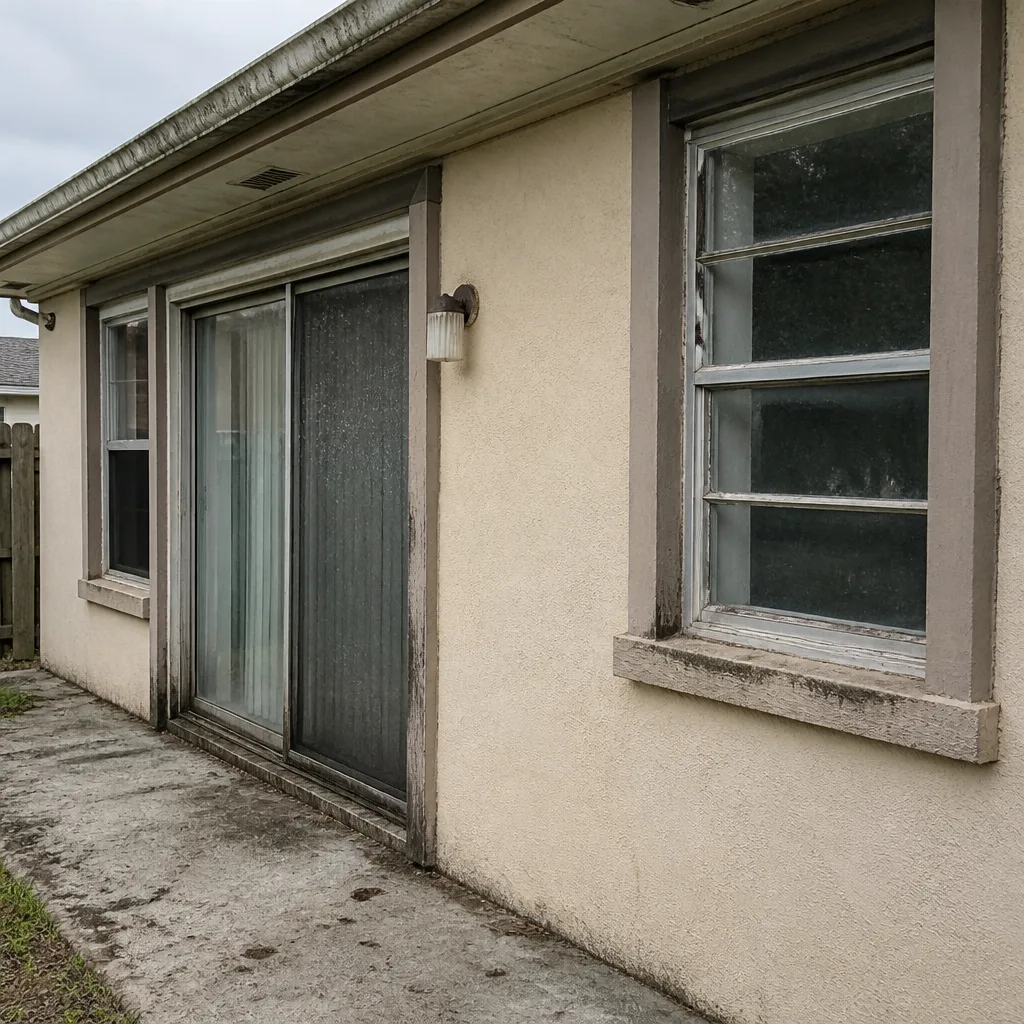 Before
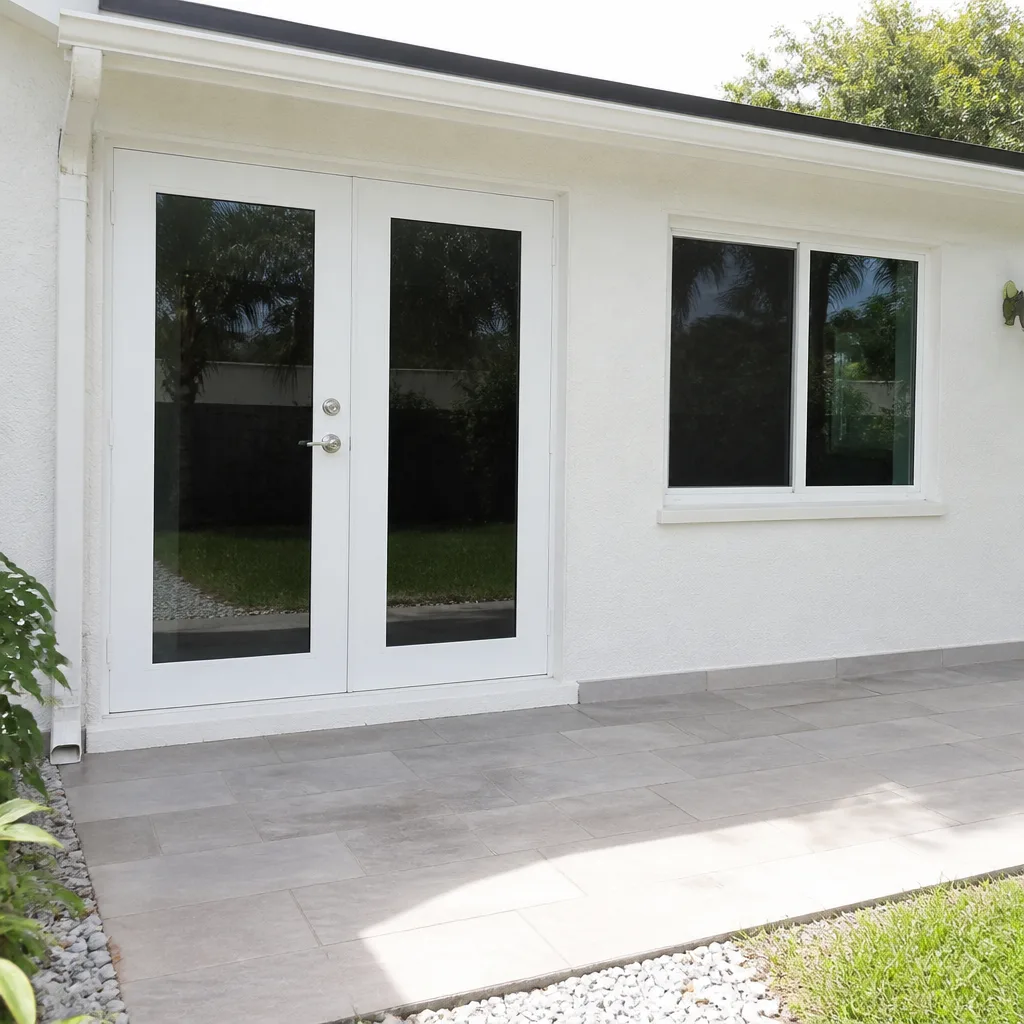 After
After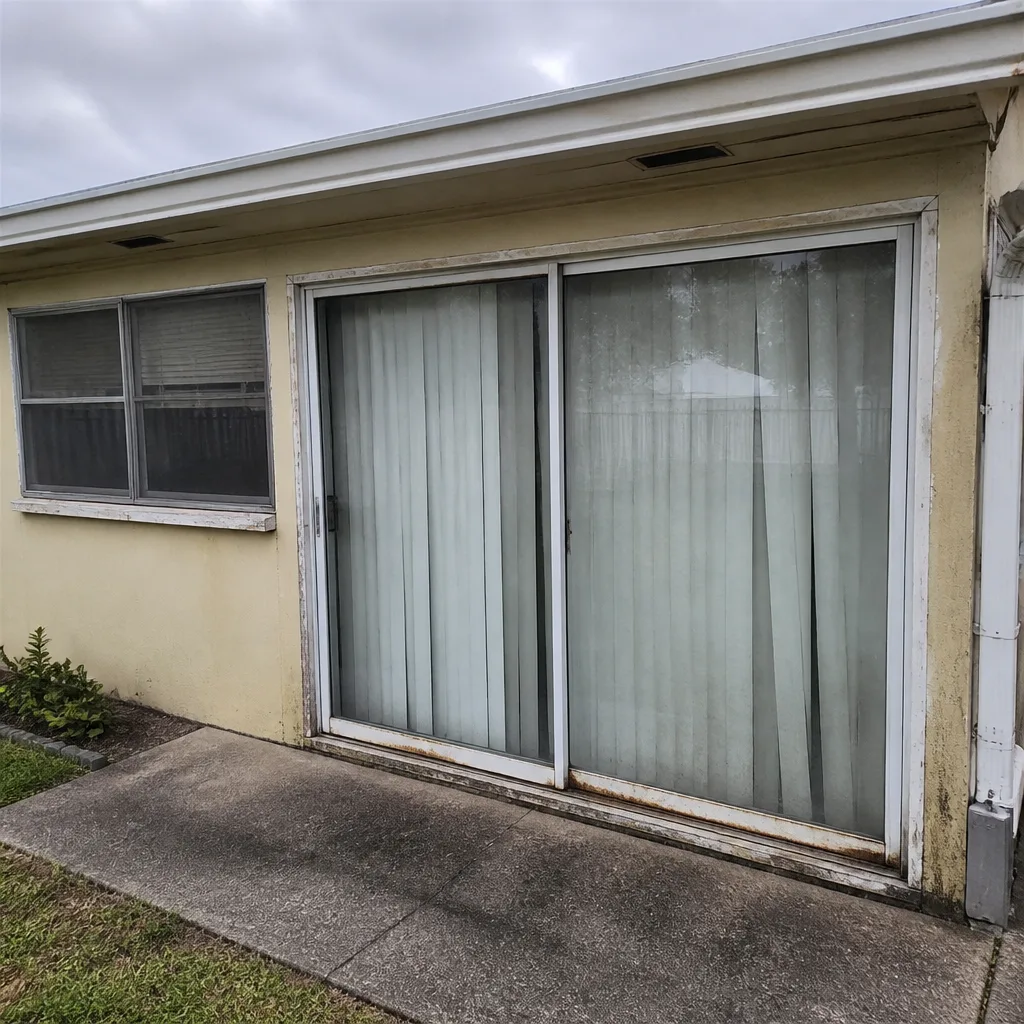 Before
 After
AfterWindows & Doors Warning Signs: A Greenacres Homeowner’s Reference Guide
Most Greenacres homeowners don’t replace a window because it looks worn. They replace it because it stopped doing its job quietly. A window that fogs between the panes, a sliding door that needs a hip check to latch, a frame that sweats during summer thunderstorms. These are not personality quirks. They are mechanical failures with a timeline. South Florida humidity, salt air, and summer heat cycles accelerate every one of them. By the time a window or door announces itself loudly, the damage has usually spread past the part you can see. This reference guide walks through the warning signs that matter, what they mean, what they cost to fix versus replace, and when to call someone who does this work every day in Greenacres.
Quick Answer
Windows and doors in Greenacres typically need replacement or repair when you see condensation between glass panes, daylight through weatherstripping, frames soft enough to press a fingernail into, or doors that bind seasonally. Most warning signs fall into three categories: seal failure, frame rot or movement, and hardware fatigue. None of them improve with time in Florida’s climate, and ignoring them raises energy bills and invites water damage.
Table of Contents
- Condensation Between the Panes: Seal Failure
- Drafts and Air Leaks Around Frames
- Doors That Bind, Stick, or Won’t Latch
- Soft Wood, Rot, and Termite Evidence in Frames
- Cracked Glass, Stress Fractures, and Impact Damage
- Hardware Fatigue: Cranks, Locks, and Rollers
- Rising Energy Bills and Hot Spots Near Windows
- Water Stains and Leaks After Rain
Condensation Between the Panes: Seal Failure
Fog between two panes of glass is not a cleaning problem. It is a mechanical failure of the insulated glass unit, or IGU. The seal around the perimeter of the glass has broken. The argon or krypton gas that provides insulation has leaked out, and the humidity in Palm Beach County air has leaked in. Once that happens, the inert gas is gone permanently. No defogging service can restore it, despite what some out-of-town contractors advertise.
Seal failure matters more in Greenacres than in a dry climate. Outside air here carries constant moisture. When a failed IGU cools at night, that moisture condenses inside on the glass where no window cleaner can reach it. The fog comes and goes with temperature swings, which means a homeowner can look at a window in the afternoon and think it’s fine, only to see it milky the next morning.
What Seal Failure Looks Like
- Persistent fog or condensation trapped between the glass surfaces, not on the room side
- Wavy, oily-looking streaks or residue on the inner glass surfaces
- Glass that appears smoky or scratched from the inside after heavy rain
- Visible separation at the spacer bar around the perimeter of the glass
A failed seal does not immediately shatter or leak rain into the room. What it does is worse over time: it silently eliminates the thermal and acoustic insulation value of that window. The home loses conditioned air, the compressor cycles more often, and the window is reduced to a single pane of glass with a decorative sheet behind it. The fix is either a replacement IGU, which works while the frame is sound, or a full window replacement if the frame is also past its useful life. For homeowners in Lake Worth Road neighborhoods and older Greenacres subdivisions where windows may be fifteen to twenty years old, the condition of the frame usually decides which path makes sense.
Drafts and Air Leaks Around Frames
A window that lets air pass through the frame is not a window. It is an uninsulated hole in the wall with glass in it. In Greenacres, air leaks are most noticeable in two seasons: deep summer, when the air conditioner runs for hours and humidity seeps in at the edges, and the few cool weeks in January, when the drop in temperature makes a leak at the sill feel like an open vent.
Weatherstripping is a wear item. It degrades fastest on the west and south sides of the house, where afternoon sun and rain hit hardest. Double-hung windows also wear the parting bead and jamb liners, and once those loosen, the sash rattles and leaks even when the weatherstripping looks adequate.
Original windows in many Greenacres homes date from the early 2000s construction boom. That means most of them are on their second or third set of weatherstripping already. If a window is more than twenty years old, replacement weatherstripping is often a temporary patch over a bigger problem: the sash has warped, the frame has shifted, or the original flashing was never done correctly.
How to Test for a Draft
- Turn off ceiling fans and air conditioning so the air in the room is still.
- Close the window completely and lock it.
- Run the back of your hand slowly along the meeting rail, the jambs, and the sill.
- Do the same on the outside on a windy day, or use a stick of incense near each seam and watch the smoke.
- Mark any window where air moves; that is a leak that costs you money every billing cycle.
At TruePane Windows & Doors home, we inspect the sash, the jamb liners, and the exterior caulking as one system, because air does not respect the line between the window and the wall it sits in.
Doors That Bind, Stick, or Won’t Latch
In Florida, doors move. A door that latched cleanly in March may drag at the top corner in July. Wood swells with humidity. But there is a difference between seasonal expansion and a door that has permanently shifted out of square.
Greenacres sits on flat, sandy soil, and slab foundations here are generally stable. What is less stable is the house framing around the door opening. Years of humidity cycles, minor settlement, and opening force from wind can rack the rough opening. When the opening goes out of square, the door panel stays rectangle. The result is a gap at one corner when the door is closed, or a strike plate that misses the latch bolt entirely.
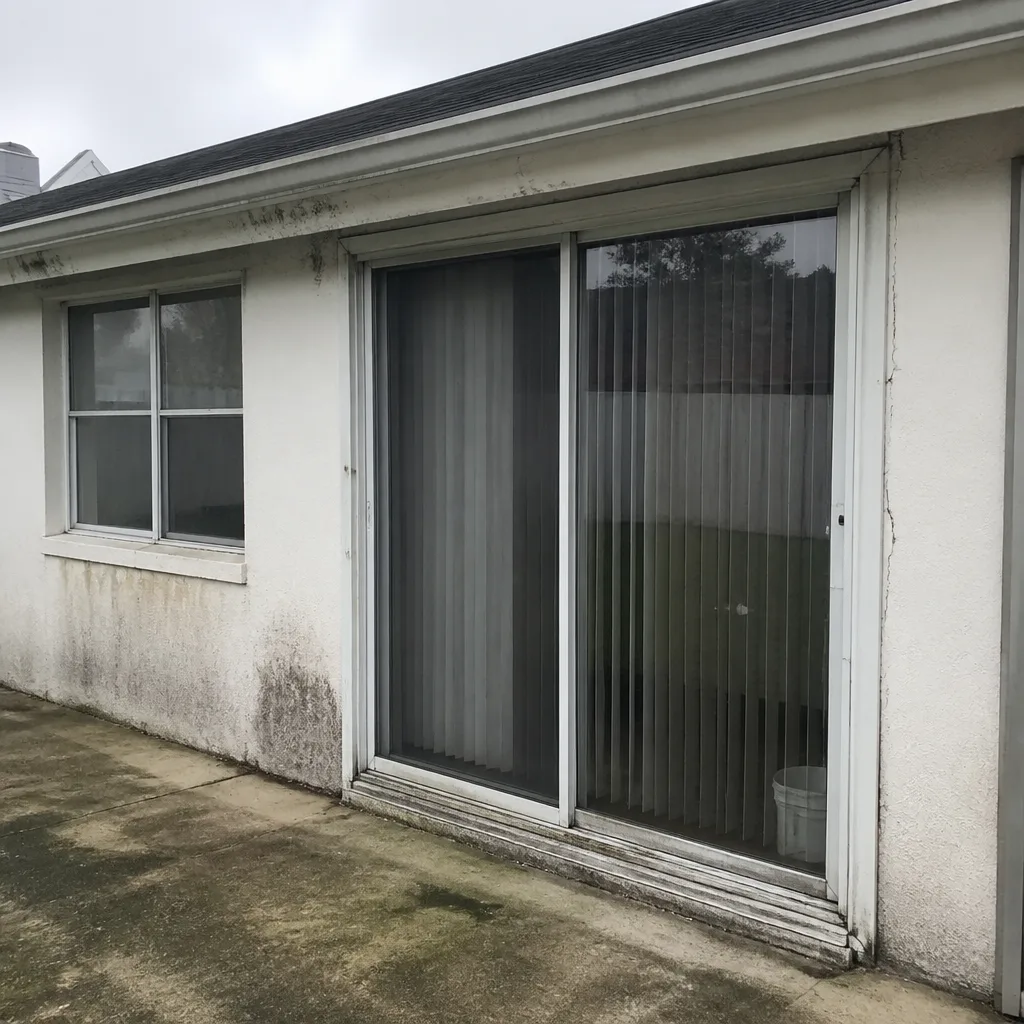
Sliding glass doors have their own set of symptoms. Rollers wear flat over time, which drops the panel and makes it drag. The track collects sand, and a dragging panel grinds that sand into the aluminum. A sliding door that requires real effort to move is telling you the rollers are done. Replacement rollers are inexpensive; a replacement track and panel are not. We see this weekly in Greenacres homes with original patio sliders from the 1990s.
Signs It Is More Than Weather
- The door binds in the same spot regardless of season or weather
- The gap between door and jamb is wider at the top than the bottom, or the reverse
- The door panel rubs hard enough to leave paint or finish transfer on the jamb
- The deadbolt no longer lines up without lifting or pulling on the handle
If a door needs the handle lifted to latch, the hinges or the rough opening have moved. That is a structural alignment fix, and it is rarely resolved by tightening screws alone. A trained technician can tell the difference in about ten minutes with a level and a straightedge.
Soft Wood, Rot, and Termite Evidence in Frames
Wood window frames and door jambs are the first parts of a home to rot in Palm Beach County’s climate. The rot starts invisibly, in end grain and behind stucco, where water wicks in and never fully dries. By the time the paint blisters or the wood turns spongy to the touch, the damage is often an inch or more deep.
Press a fingernail into the bottom corner of a window frame or the threshold of an exterior door. Healthy wood resists. Rotted wood gives a quarter inch with no effort. That is not cosmetic. A rotted jamb cannot hold a hinge screw under tension, and a rotted window sill channels water directly into the wall cavity below the window.
Termites are the second half of the problem. Subterranean termites and drywood termites both exist in Greenacres, and both gravitate toward softened wood that is already compromised. Frass, which looks like coarse coffee grounds, near the base of a window or door is drywood termite activity. Mud tubes running up a concrete stem wall toward a wood frame are subterranean. Neither is a window’s problem alone; both require definite attention to the whole opening.
In our experience, by the time a homeowner notices soft wood, the opening usually needs new lumber, new flashing, and a window or door that is installed with a moisture management system. Replacing the visible unit without correcting the water path simply rebuilds the same failure on a newer product.
Cracked Glass, Stress Fractures, and Impact Damage
Not every crack is an emergency. Some are stress fractures that appeared without any visible cause, and some are the aftermath of a lawn mower throwing a pebble at 80 miles per hour. What matters is what happens after the crack appears.
In a single-pane window, a crack is a security and safety issue immediately. In a double-pane IGU, a crack in one pane often breaks the thermal seal of the unit, even if the crack itself does not run to the edge. The window is still intact, but the insulation value is gone. A stress crack that starts at the edge and runs inward in a straight or slightly curved line usually means the glass was under pressure from installation or frame movement. It will keep running.
Greenacres is not in the same high-velocity hurricane zone as the coast, but Florida code still requires impact-rated or fully protected windows for new construction and many replacements. When a cracked opening gets rebuilt, the new glass has to meet current wind-borne debris standards. That is not an upsell; it is state code. For replacement of plain annealed glass in an existing non-impact frame, the correct answer is usually tempered glass for safety, which breaks into small pebbles rather than sharp shards.
Quick Answer
A cracked window in Greenacres should be repaired immediately if the glass is single-pane, if the crack is spreading, or if the window is in a child’s room, a bathroom, or a doorway. A stable crack in a double-pane unit still warrants replacement because the thermal seal will not recover.
Most glass replacements do not require an entire new window unless the frame is also damaged. An IGU can be ordered to the exact size and installed into a sound frame in a single visit. Pella, Marvin, Milgard, and Jeld-Wen all offer replacement IGUs through their authorized regional dealers, including TruePane Windows & Doors. The practical choice depends on the frame type, the original manufacturer, and the age of the window system.
Hardware Fatigue: Cranks, Locks, and Rollers
Window and door hardware gets used thousands of times a year without a second thought. Then one afternoon a crank handle spins without moving the sash, or a lock knob turns a full circle and never engages. These failures are usually sudden in the noticing and gradual in the wearing.
Casement window crank mechanisms are gear-driven. The gears are typically zinc alloy, and once the lubrication dries and a tooth breaks, the mechanism is done. The replacement part is available for most major brands: Pella, Marvin, Milgard, and Jeld-Wen all keep cranks and operators in their parts pipeline. Installation takes an hour or less when the window is otherwise sound.
Sliding door rollers are more prone to environmental wear in Greenacres than in dry climates. Fine sand works into the roller bearings, and the bearing surfaces grind themselves matte. A panel that shudders or scrapes along the track is riding on dead rollers or a flattened track. If the rollers are replaced before the track is grooved, the repair is straightforward and inexpensive for its value. If the panel has ground a channel into the aluminum track, the track itself is usually part of a larger frame section that must be replaced as a unit.
A Simple Hardware Check, Twice a Year
- Open every window in the house fully, then close and lock it. Note resistance.
- Crank each casement window through its full arc and listen for grinding or skipping.
- Slide each patio door and feel for drag, grit, or vibration in the panel.
- Tighten visible screws on hinges, strike plates, and operator covers with a manual screwdriver.
- Lubricate tracks and crank gears with a dry silicone spray. Do not use oil-based lubricant, which attracts grit.
The goal is to catch a fifteen-dollar roller before it becomes a three-hundred-dollar track replacement. We do this as part of our maintenance check, which includes a full opening survey and a written condition report so a homeowner knows exactly what is wearing and what it will cost to address on their own schedule.
Rising Energy Bills and Hot Spots Near Windows
Windows are responsible for a large portion of a home’s cooling load in Palm Beach County. The Florida sun beats on glass for most of the day, and even a well-built window transmits some of that heat indoors. A window with a compromised low-E coating, a failed seal, or air leakage transmits significantly more.
Low-E coatings are microscopically thin metal oxide layers that reflect infrared heat while letting visible light pass. They are applied to the glass at the factory and are not field-appliable. When a homeowner sees a window that looks slightly hazy or shows a subtle rainbow patch in certain light, the coating may be degrading. This is rare on windows less than a decade old, but it happens more often in Greenacres than the national average because of constant UV exposure and salt content in the air.
The practical test is behavioral. Does the wall near a window feel noticeably warmer than the rest of the room in the late afternoon? Does the thermostat cycle more often in a room with older windows than in a newer section of the house? Does the power bill climb year over year even when the household’s habits have not changed?
A single-pane aluminum-framed window from the 1990s conducts heat poorly compared to a modern double-pane vinyl or thermally broken aluminum window. Replacing a whole house of old windows rarely pays for itself in energy savings alone within five years. That is an honest number. Replacing the worst openings in the rooms the family actually lives in does make an immediate comfort difference, and it stops the moisture and condensation damage that accrues on poorly insulated glass in this climate.
Water Stains and Leaks After Rain
Water that reaches the interior of a home through a window or door opening has most likely been getting in for a long time before you saw it. The tell is the stain: a watermark that appears below a window sill after a storm, paint bubbling along the bottom trim of a door frame, or a dark line where the baseboard meets the wall near a sliding door.
The source is almost never the glass. It is the installation. In Greenacres, one common point of failure is the window’s exterior flashing or the lack of a proper pan at the sill. Water driven against the wall by summer storms seeps behind the stucco or siding, finds the window’s rough opening, and follows gravity inside. Another common failure is the weep system: the small drain holes designed into the bottom of many window and door frames. When they clog with pollen or sand, water collects in the track and spills over the interior lip.
Clearing a clogged weep hole is a five-minute maintenance task. Replacing missing flashing around the rough opening is not. It requires removing the exterior cladding around the opening and rebuilding the water management layer, and it is not something we recommend as a DIY project. The risk of getting it wrong is hidden rot that goes unnoticed until the opening itself is compromised.
If water has been entering for years, the studs around the opening are likely damaged. We have opened walls in Palm Beach County where the bottom twelve inches of a window king stud had the structural integrity of a wet sponge. The fix is more than a new window; it is a reframed opening, new sheathing, and a proper sill pan.
Common Mistakes to Avoid
- Replacing glass without replacing the failed seal. A new pane in a broken IGU just creates a single-pane window with extra steps. The gas is gone, and the thermal performance does not come back.
- Caulking over rotted wood. Caulk seals the surface but traps the moisture that is already inside the wood. The rot continues out of sight until the frame fails outright.
- Ignoring a sticking door because it still latches. A door that rubs is using its hardware and framing as a wear surface. The longer it binds, the more the opening moves, and the more expensive the correction becomes.
- Lubricating rollers with WD-40. WD-40 is a solvent, not a long-term lubricant. It cleans briefly and then evaporates, leaving the rollers drier than before and attracting a fresh layer of dust.
- Ordering replacement windows online without a site measurement. An opening measured from the interior trim is not the same as one measured from the rough opening. Smaller openings mean more shim work and a weaker install; larger openings mean reframing. We measure every opening twice before a single order is placed.
- Replacing impact windows one at a time without checking code compliance. Florida product approvals are building-wide in many Greenacres communities. Mixing impact-rated and non-impact-rated openings, or mixing manufacturers with different approval documentation, can complicate a future permit or insurance inspection.
- Waiting until a window is visibly broken to replace it. Seal failure, frame rot, and water intrusion all begin invisibly. A visible crack is usually the final stage of a problem that has been developing for years.
When to Call a Professional
Call a professional when the symptom involves the opening, not just the glass. Seal failure, frame rot, doors out of square, water intrusion, and any glass replacement larger than a small lite should be handled by a glazier who carries Florida licensing and pull permits where required. The danger points are real: tempered glass under tension can shatter unexpectedly during removal, and a rotted jamb behind a door hinge means the door itself is not properly secured. A trained technician works these openings every week and recognizes what a homeowner might miss. TruePane Windows & Doors offers free estimates in Greenacres. Call (754) 339-0784 and a live person answers, day or night.
Frequently Asked Questions
Window replacement in Greenacres typically costs between $450 and $1,200 per opening for standard vinyl double-hung units installed, with impact-rated glass and larger architectural windows running higher. The exact price depends on the opening size, the frame material, the glass package, and whether any reframing or stucco repair is needed. TruePane quotes manufacturer lines side by side on paper so you see exactly what each price includes. Call (754) 339-0784 for a free, written, no-surprise estimate.
A fogged window cannot be restored to its original insulated performance. The seal has failed and the argon or krypton gas has escaped. The practical repair is a replacement IGU, which preserves the frame if it is still sound, or a full window replacement if the frame is degraded. Call (754) 339-0784 and we will tell you which path fits your opening.
In Greenacres, vinyl windows typically last 20 to 30 years, aluminum windows 15 to 25 years, and wood windows 10 to 20 years depending on exposure and maintenance. Coastal air, intense UV, and summer humidity shorten every type compared to northern climates. If your windows are approaching two decades, a professional condition survey is the most useful next step, and the maintenance check includes one.
Yes, we pull the required permits and schedule the inspections. When a city or county inspector signs off on the work, it means the installation meets the current Florida Building Code, including wind-borne debris requirements where applicable. The permit is part of the job, not an optional add-on.
The price we quote is the price on the bill. If we open a wall and find rot behind an existing window, we stop and show you before any additional work begins. No change orders slip onto the invoice. That is a square deal, and it has been TruePane’s standard since day one.
Most individual window replacements in Greenacres are completed in a single visit, typically four to six hours for a standard opening. A whole-house window package may take two to four working days depending on the size of the home and whether stucco repair or interior trim work is required. We will tell you the schedule before we start, and we will be there when we say.
The Bottom Line
Windows and doors are the only moving parts of a home’s envelope, and in Greenacres they work against heat, humidity, salt air, and storm-driven rain every day. The warning signs in this guide all point the same direction: address the failure early, while it is a glass or hardware repair, and before it becomes a framing and water intrusion project. If the pane is not true, the job is not done. We stand behind that, in writing, on every opening we touch.
For a free estimate in Greenacres, call TruePane Windows & Doors at (754) 339-0784. A live person answers, any hour, any day.
Written by Dale Kessler, Owner at TruePane Windows & Doors, serving Greenacres since 2008.
Six Reasons Homeowners Choose TruePane Windows & Doors
Impact systems engineered to design pressures up to +/-100, matched to your wind zone - your openings hold when the storm arrives.
Low-E insulated impact glass from our manufacturer lines commonly cuts monthly cooling bills 20-30%.
Laminated impact glass shuts out up to 40% of outside noise - traffic, neighbors, weather.
Monitoring services run $30-90 a month. Laminated impact glass resists forced entry around the clock, with no subscription.
Florida homeowners average around 25% savings on the windstorm portion of their policy after protecting every opening - some homes qualify for more.
A full impact package upgrades curb appeal, buyer confidence and appraised value in one project.